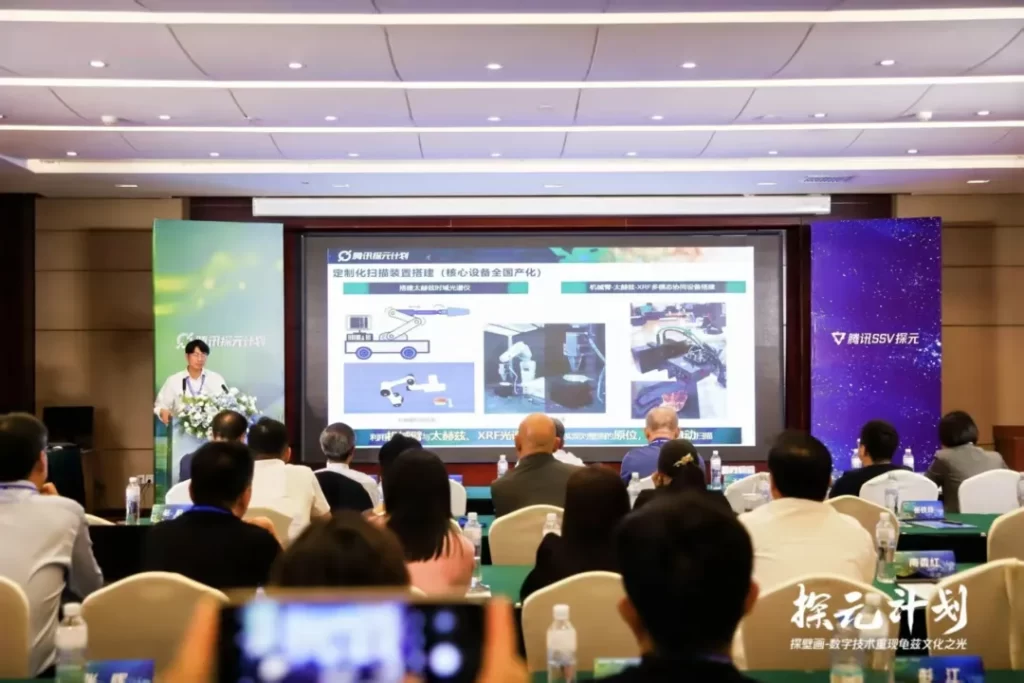
Recently, the Tencent "Tanyuan Program 2024" Co-Creation Camp Xinjiang stop held its open day event in Kuqa. Focusing on the needs of identifying smoke-damaged murals in the Kizil Grottoes and AI virtual restoration of incomplete murals, the event drove the co-creation project for this scenario to improve technical outcomes, optimize platform applications and explore cultural revitalization. Cultural relics conservation, culture and technology experts from across the country gathered with local leaders in Xinjiang to witness the Kizil Grottoes regaining their brilliance in the digital era.
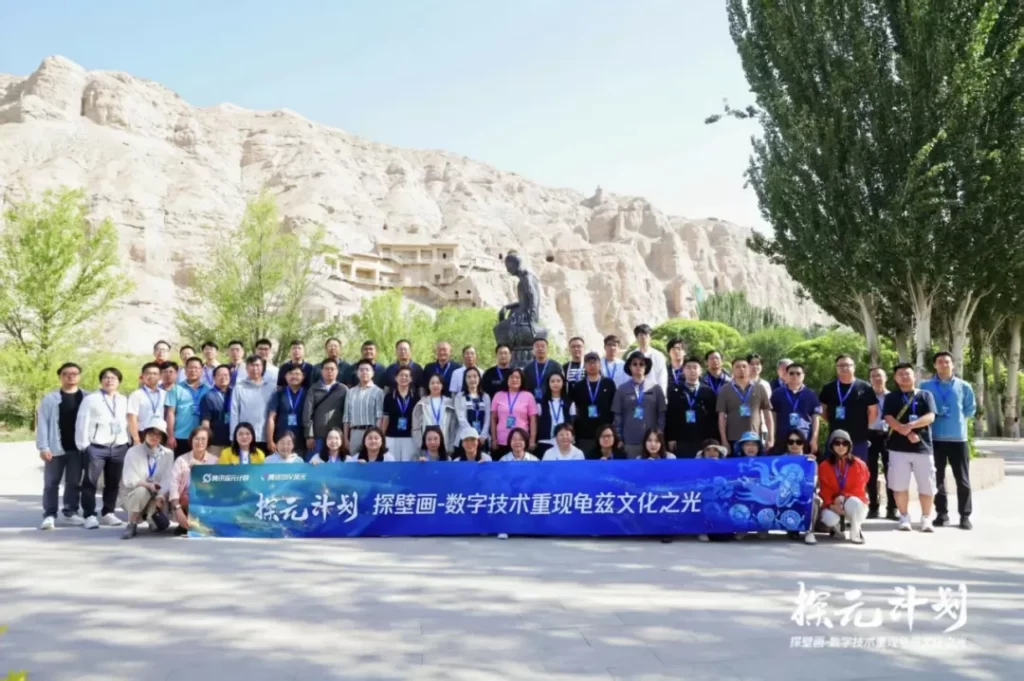
With the support of the Tencent "Tanyuan Program 2024", Chengdu Miji Technology Co., Ltd., together with the School of Electronic Science and Engineering of UESTC and the School of Art and Archaeology of Zhejiang University, is contributing to the restoration of the Kizil Grottoes murals. The project adopts multimodal fusion technology combining a robotic arm, terahertz time-domain spectroscopy and X-ray fluorescence spectroscopy to perform non-destructive testing and image recognition of the smoke-damaged murals in Cave 161 of the Kizil Grottoes.
Terahertz waves have excellent properties such as strong penetrability and safety, and have attracted wide attention in recent years for their great potential in non-destructive testing of cultural relics. Thanks to its strong penetration and non-destructive identification capabilities, terahertz time-domain spectroscopy can penetrate the soot layer without damaging the murals, extract information from the covered pigment layer, and fully identify the covered murals — providing a diversified toolkit for cultural relic preservation.
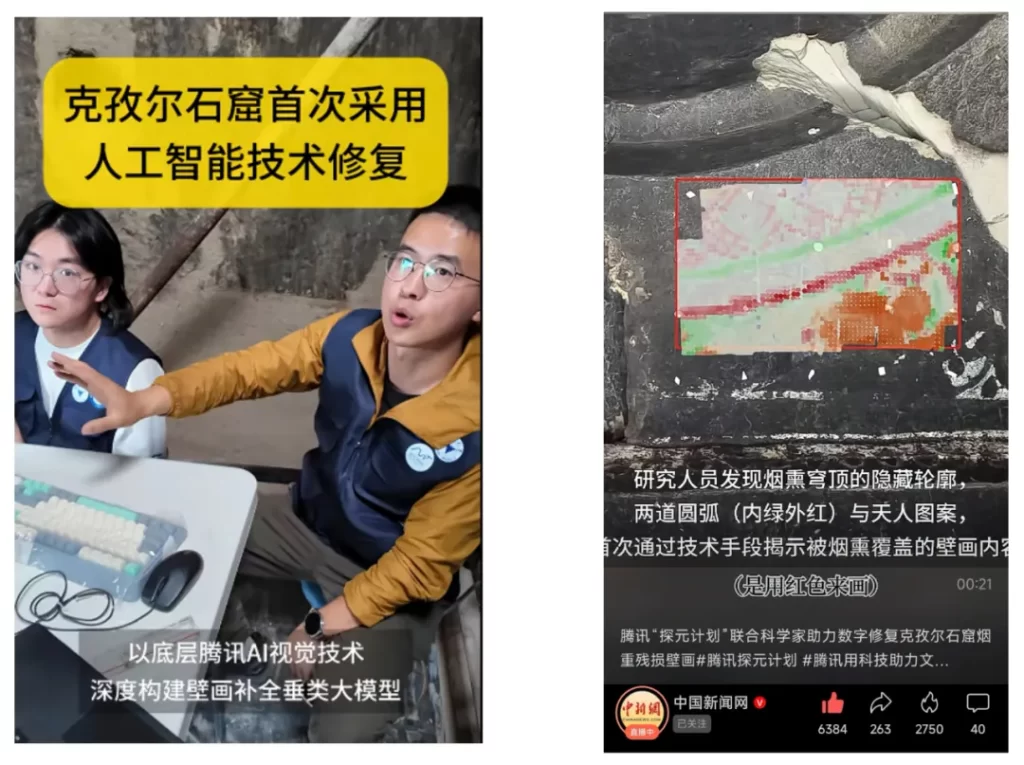
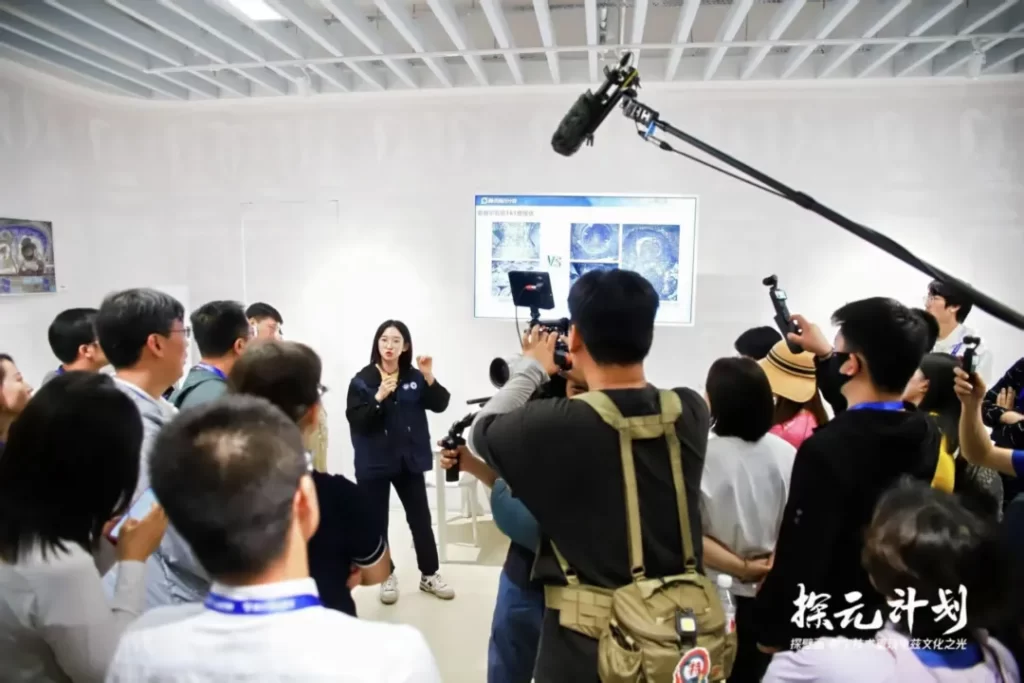
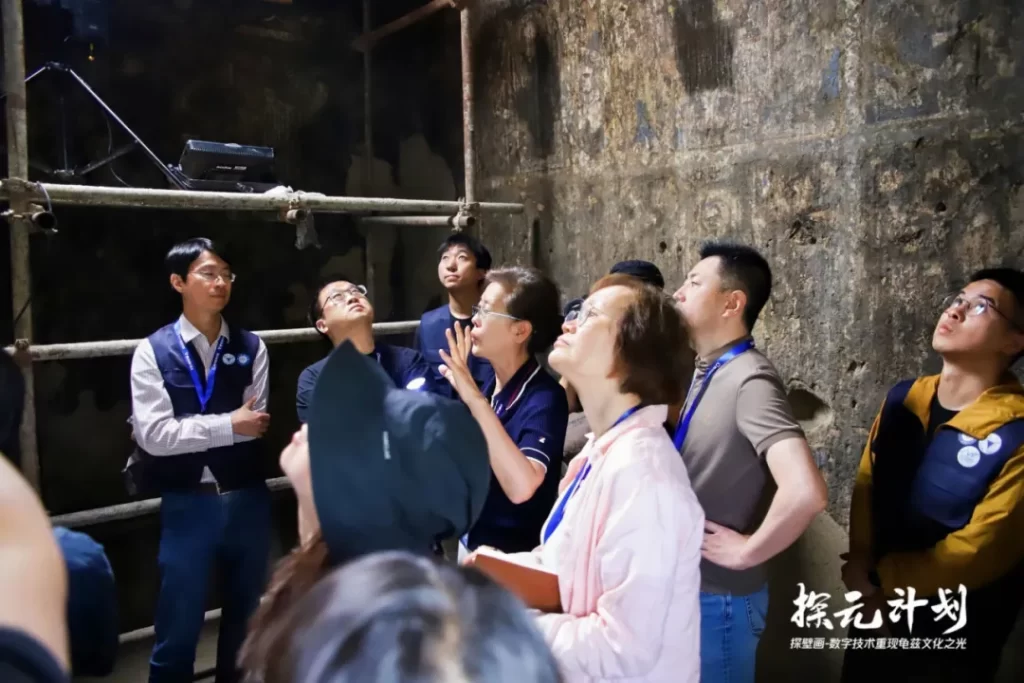
At the event, Professor Zhang Hui, Director of the Department of Archaeology and Museology at Zhejiang University, disclosed the breakthrough achievements of terahertz time-domain spectroscopy in identifying smoke-damaged murals. Notably, this is the world's first practice of applying terahertz, XRF and structured-light multimodal fusion technology to extract hidden information from precious cultural relics. The application of this technology not only opens a new path for the conservation of the Kizil Grottoes, but also provides a highly valuable technical reference and innovative ideas for the protection of other cultural heritage sites.
With the help of technology, the identification of smoke-damaged murals and the AI virtual restoration of incomplete murals in the Kizil Grottoes are progressing steadily. We believe that with the joint efforts of all parties, the murals of the Kizil Grottoes will regain their brilliance in the digital era, allowing future generations to appreciate the artistic charm of a thousand years ago and ensuring that these precious cultural heritage treasures are passed on forever.