Author: Zhang Tianyu
Recently, Rainer Hillenbrand of CIC nanoGUNE BRTA, Spain, a renowned scholar in the international near-field optics community, led the publication of a long review paper in the top international journal Nature Reviews Materials, comprehensively and in detail introducing the application progress of scattering-type scanning near-field optical microscopy (s-SNOM) across the visible-to-terahertz (Visible-to-THz) bands. Addressing the problem that traditional optical microscopes are limited by the diffraction limit and cannot achieve high-resolution characterization at subwavelength scales across a broad frequency band (visible to terahertz), the review presents a new type of near-field nanoscopy technology.
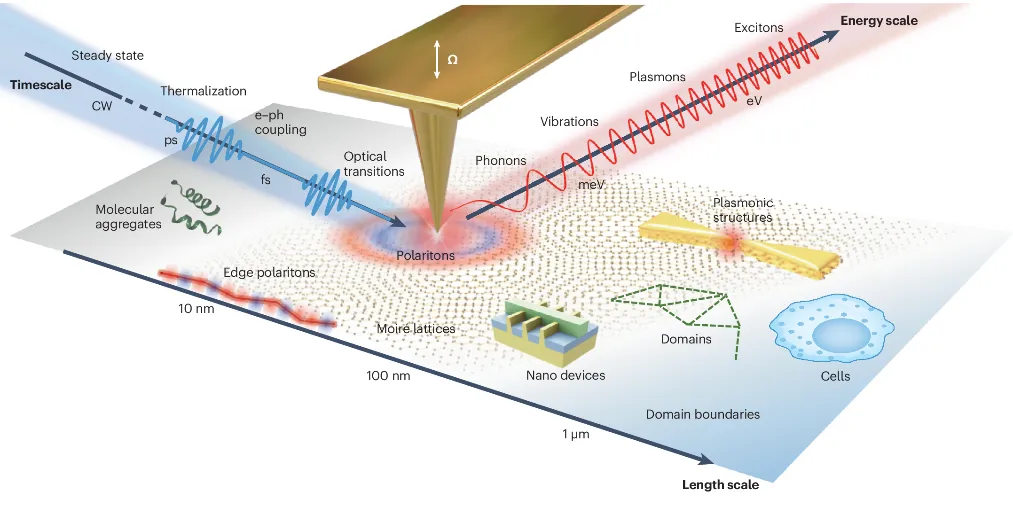
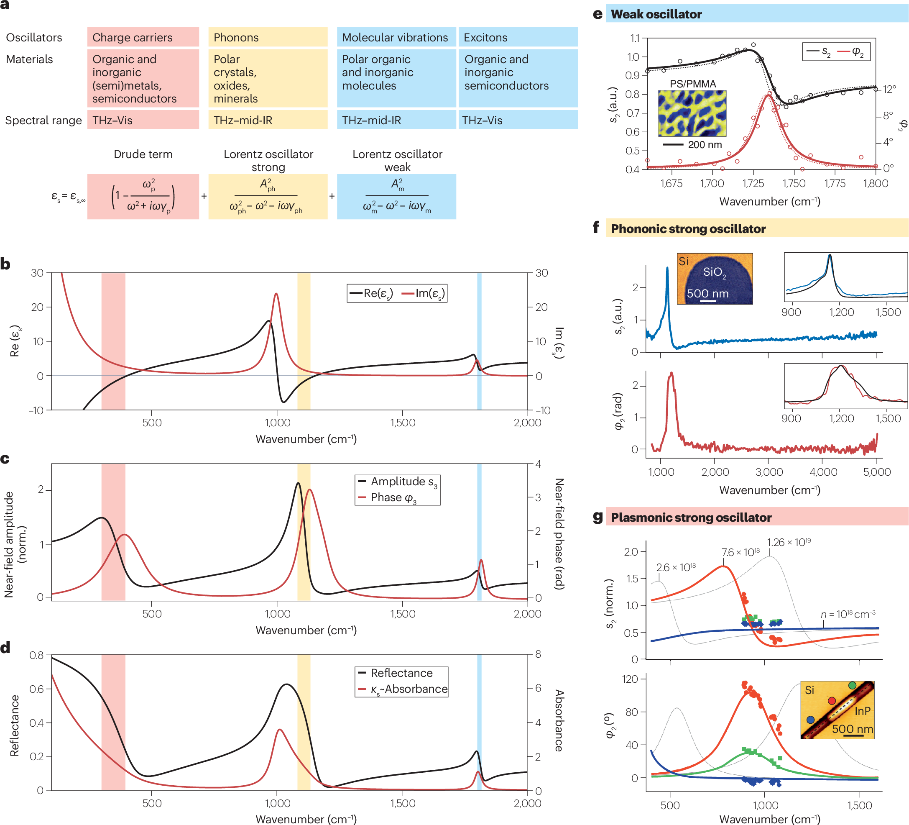
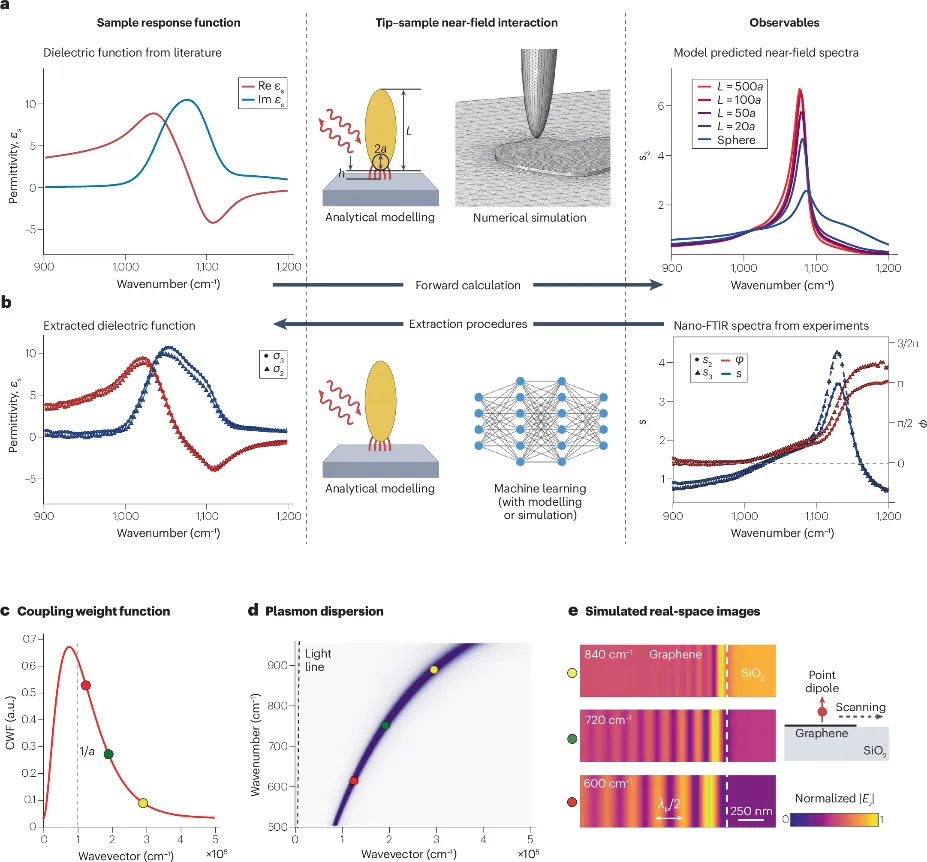
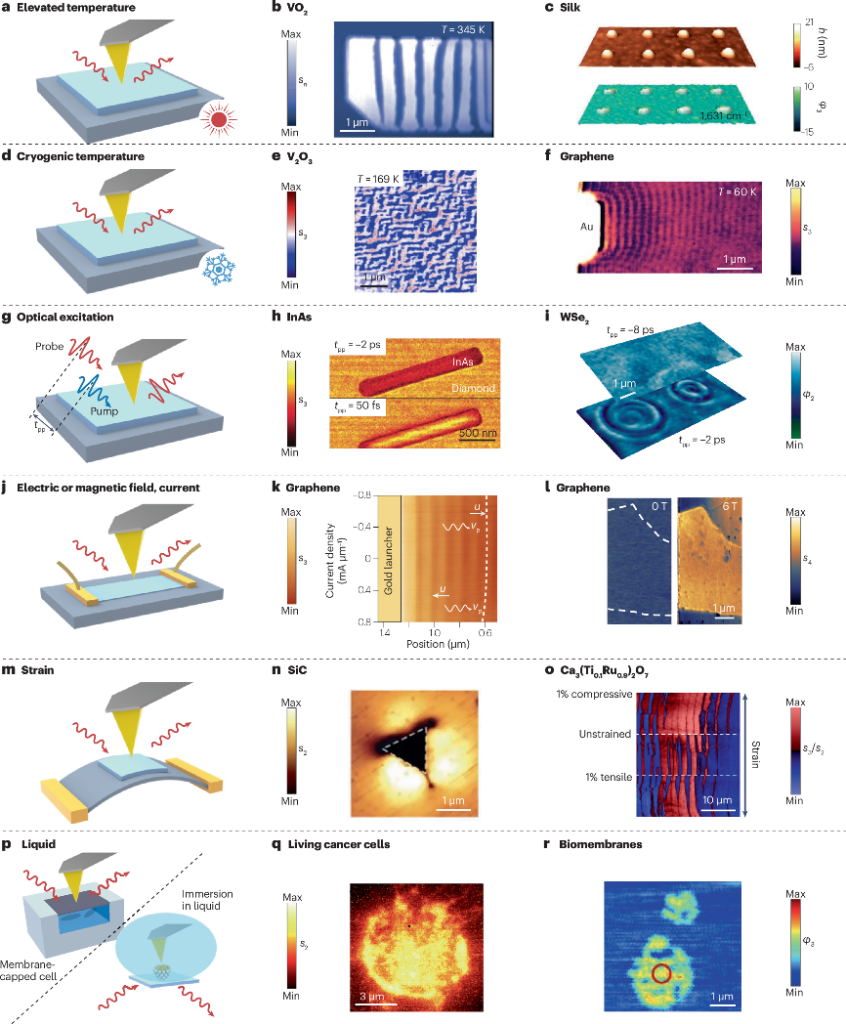
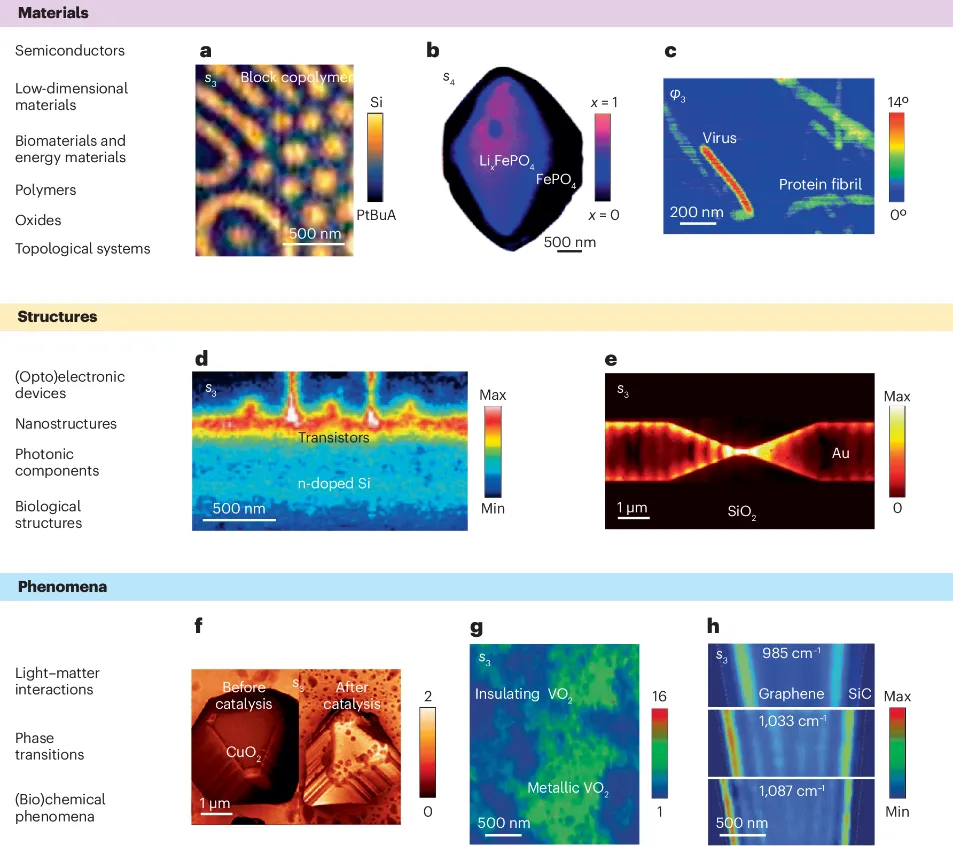
This work systematically elaborates on the physical mechanisms of s-SNOM (such as near-field scattering, signal demodulation, and normalization), instrument design (combining monochromatic and broadband light sources), near-field contrast models (dielectric function and material response), and its application cases in materials science, condensed matter physics, and biochemistry (such as carrier dynamics, polariton imaging, and phase transition studies). In addition, it summarizes the technical extensions of s-SNOM in extreme environments (low temperature, strong fields, liquids) and future development directions. Through the combination of innovative probe design, multi-physics coupling, and intelligent signal processing methods, the technical bottleneck of nanoscale imaging across the full visible-to-terahertz band has been broken through, providing an important tool for cross-scale, multimodal material analysis.
This achievement was published in the top international journal Nature Reviews Materials under the title "Visible-to-THz near-field nanoscopy". Rainer Hillenbrand is the first author and corresponding author of this paper. Yohannes Abate (University of Georgia) and Mengkun Liu (Stony Brook University/Brookhaven National Laboratory) are co-corresponding authors. Other co-authors include Xinzhong Chen (Stony Brook University/Columbia University) and Dimitri N. Basov (Columbia University).
1. Research background
Since the birth of the optical microscope, the diffraction limit has always constrained its spatial resolution (typically on the order of half a wavelength), making it difficult to meet the high-resolution characterization needs of material microscopic properties at the nanoscale (such as local electromagnetic field distributions, lattice vibration modes, etc.). Although near-field optical microscopy achieves subwavelength resolution through the local enhancement effect of a probe, existing technologies are generally limited to a single frequency band (such as visible light or terahertz) and cannot cover coordinated detection across the broad frequency range from visible light to terahertz (400 nm–3 mm). This limitation creates serious technical barriers for the cross-scale correlation analysis of electronic state transitions (visible response) and lattice/molecular vibrations (terahertz response) in materials research, hindering a deeper understanding of light-matter interaction mechanisms.
Current research faces three core challenges:
1. Broadband probe design must balance the electromagnetic field localization enhancement efficiency across different bands; traditional metal probes suffer a sharp drop in field enhancement capability in the terahertz band due to the significant skin effect;
2. Multi-band signal acquisition is susceptible to crosstalk, and nonlinear noise arises when high-energy visible photons and low-energy terahertz photons are detected cooperatively;
3. Cross-scale property correlation analysis lacks a unified theoretical model, making it difficult to establish quantitative relationships between electronic excitation and lattice dynamics.
In addition, research on novel quantum materials, heterojunction devices, and biological macromolecules urgently requires combined characterization methods with both ultra-high spatial resolution (<10 nm) and broad spectral coverage (0.1–750 THz) to reveal microscopic mechanisms such as interfacial effects and carrier transport.
2. Research content
To address the above challenges, an integrated visible-terahertz near-field nanoscopy system is proposed. Its innovation lies in combining plasmonic resonance with metasurface technology to overcome the theoretical difficulties of broadband probe design, and achieving cross-band signal decoupling through multi-physics coupling mechanisms. First, a composite probe structure based on plasmonic resonance enhancement was constructed, with a gradient-index dielectric layer and a nanoantenna array designed at the probe tip, achieving near-field local field enhancement from the visible (400–750 nm) to the terahertz (0.1–10 THz) bands. Theoretical simulations show that this probe can produce an electric field enhancement factor of over 200 times in the visible band, while maintaining more than 10-fold field amplification in the terahertz band. Second, a multi-band collaborative calibration technology was developed, using a time-division multiplexing strategy to modulate light sources of different bands and separating near-field signals of each band through lock-in amplification, solving the signal crosstalk problem in broadband imaging. The experimental system integrates femtosecond laser pump-probe technology, giving the system a time resolution on the order of 100 fs and combining ultra-high spatiotemporal resolution capabilities.
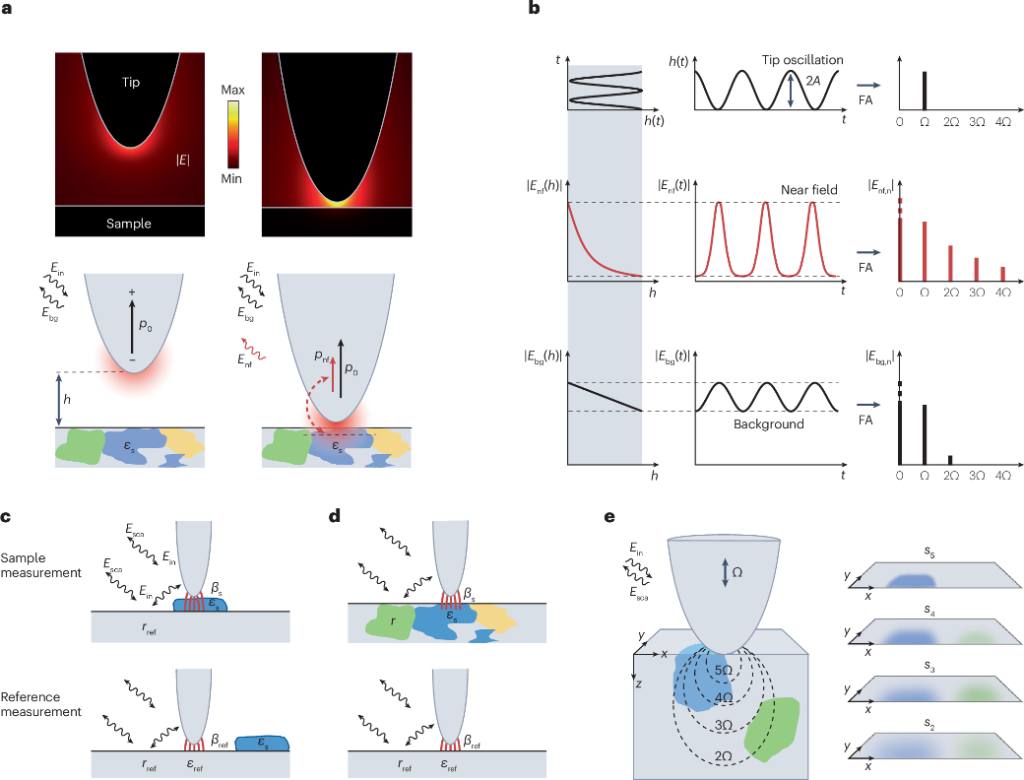
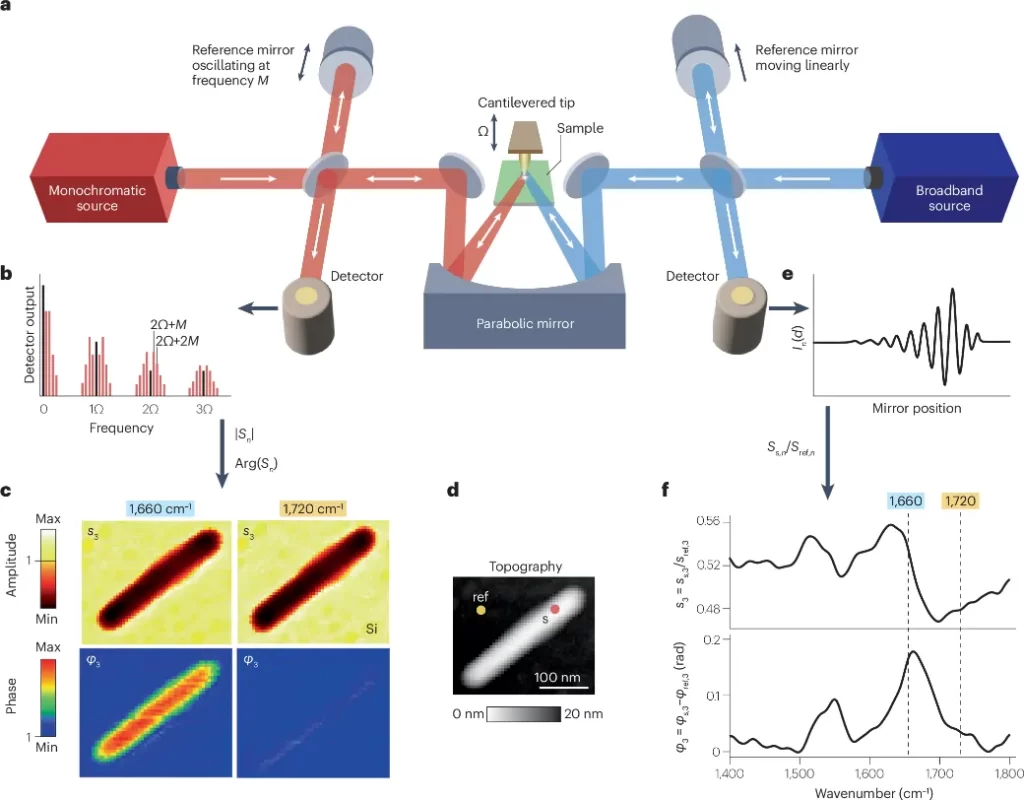
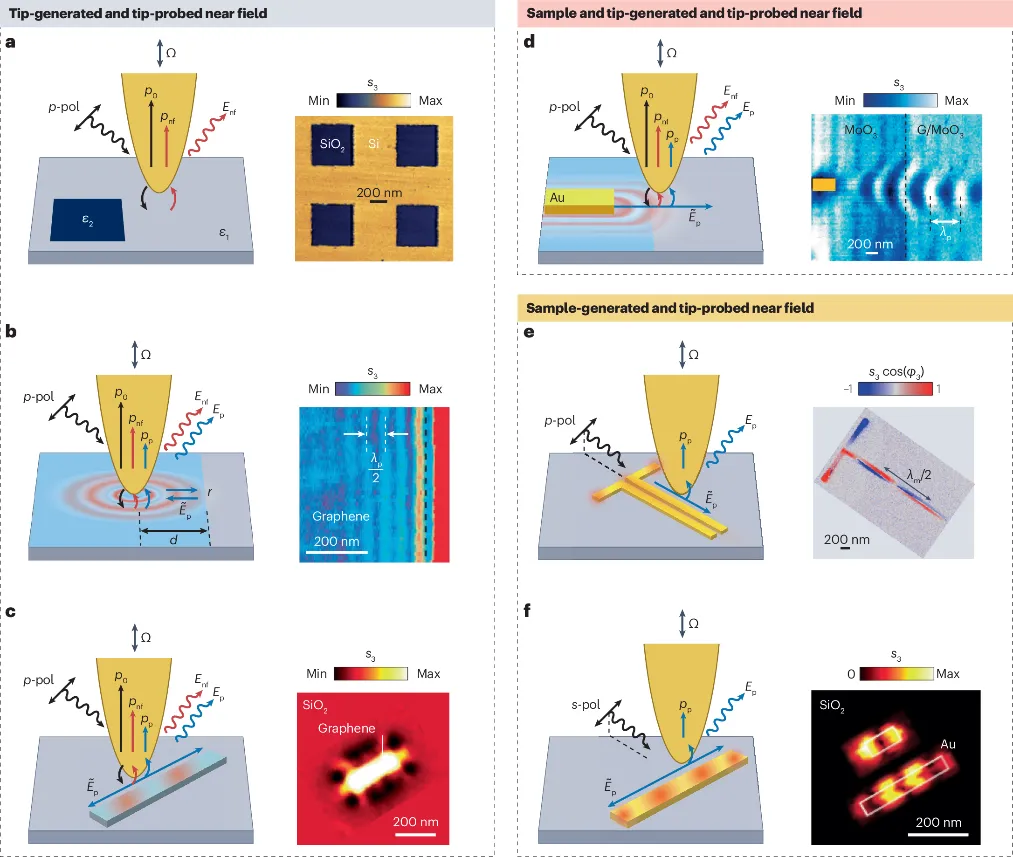
3. Research methods
A three-stage progressive research path was adopted: first, the probe geometric parameters were optimized based on the finite element method, and a quantitative mapping relationship between probe performance and structural parameters was established through electromagnetic field simulation; second, a multimodal combined experimental platform was built, integrating an atomic force microscope (AFM), a near-field optical detection module, and a terahertz time-domain spectroscopy system to achieve synchronous measurement of morphology and optical properties; finally, a deep-learning-assisted signal analysis algorithm was developed, using convolutional neural networks to extract features from near-field scattering signals, effectively suppressing thermal noise and improving the signal-to-noise ratio by 3 orders of magnitude. Particularly noteworthy is that, to address the challenges of low photon energy and poor near-field coupling efficiency in the terahertz band, the research proposes a dynamic impedance matching strategy: a piezoelectric microcavity adjusts the tip-sample distance in real time to λ/1000 (λ being the wavelength), increasing the terahertz near-field signal collection efficiency to 50 times that of traditional methods.
4. Experimental verification
Three types of typical samples were selected: two-dimensional material heterojunctions, perovskite solar cells, and biological cell membranes. The research results show that the system can achieve 5 nm spatial resolution in the visible band and 30 nm resolution in the terahertz band — an improvement of 5–8 times over existing technologies. In the characterization of molybdenum disulfide/graphene heterojunctions, an anomalous enhancement of the local density of states at the interface at a frequency of 1.5 THz was observed for the first time; combined with density functional theory calculations, this phenomenon was revealed to originate from a new type of plasmon mode induced by interlayer coupling. Cross-scale analysis of perovskite thin films found that the carrier mobility at grain boundaries exhibits anisotropic characteristics in the terahertz band, a discovery that provides a new perspective for optimizing photovoltaic device performance.
5. Research conclusions
The combined visible-terahertz near-field technology breaks the frequency-band barriers of traditional spectroscopy, achieving synchronous detection of electronic state transitions (visible response) and lattice vibration modes (terahertz response), providing a brand-new observational dimension for revealing microscopic mechanisms of materials. By establishing a quantitative relationship model between near-field signal intensity and the dielectric function tensor, the spatial distribution of optical constants of subwavelength structures was successfully derived, verifying the physical reliability of the technical solution. Cross-band correlation analysis further shows that the exciton lifetime of materials in the visible band is strongly correlated with the phonon relaxation time in the terahertz band, opening a new path for understanding many-body interactions.
6. Applications and outlook
This technology system will drive paradigm shifts in research fields such as nanophotonics and quantum materials. Future development directions include: developing adaptive band-switching probes to improve detection throughput; combining quantum sensing technology to break through existing sensitivity limits; and developing on-chip integrated near-field detection systems for in-situ dynamic monitoring. Meanwhile, the research team points out that current technology still faces challenges in probe lifetime (about 50 scans), system integration, and other aspects, and recommends optimizing probe durability through atomic layer deposition technology and exploring new principles of probe-free near-field imaging based on metasurfaces. With continued breakthroughs in related technologies, visible-terahertz near-field nanoscopy is expected to have a profound impact in fields such as novel optoelectronic device development and biomolecular diagnostics.
Paper information
Hillenbrand, R., Abate, Y., Liu, M. et al. Visible-to-THz near-field nanoscopy. Nat Rev Mater 10, 285–310 (2025).