Author: Xie Peiyao
The perfect absorption of electromagnetic waves is significant for numerous applications ranging from optical sensing to cloaking technology. Coherent Perfect Absorption (CPA), as a perfect absorption mechanism based on wave interference, has received extensive attention in optics in recent years and has demonstrated strong potential thanks to its unique advantages.
What is coherent perfect absorption?
Coherent perfect absorption is a phenomenon in which incident light waves can be completely absorbed under specific conditions. Unlike traditional perfect absorption (such as surface plasmon absorption), CPA exploits coherent effects to regulate the light absorption process under specific external conditions, enabling the system to achieve nearly 100% absorption efficiency across multiple directions and frequencies. This phenomenon is called "coherent" because it involves the interaction between incident waves and the system, in which the system exchanges energy with light waves through special physical designs (such as cavities, couplers, etc.).
System architectures
In CPA research, dual-channel and single-channel perfect absorption are two important design approaches, which achieve perfect absorption of light through different optical system architectures.
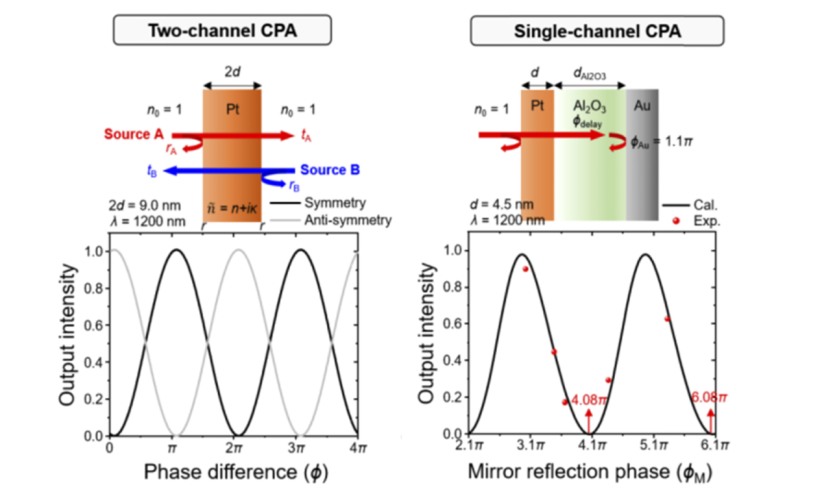
Fig. 1 Two common system architectures for coherent perfect absorption [1]
Dual-channel perfect absorption
Dual-channel CPA is a relatively complex design involving the coupling of two optical channels. In this design, light signals interfere and phase-match through the two channels, thereby achieving perfect absorption of light. The advantage of dual-channel CPA lies in its ability to effectively absorb light over a broader spectral range, and the absorption efficiency can be enhanced by adjusting the coupling strength between the two channels.
Literature analysis: Figure 2 presents a dual-channel coherent perfect absorption design based on a self-complementary metasurface. Through coherent interference of two waves propagating in opposite directions, the metasurface not only achieves broadband absorption at low diffraction frequencies, but its absorption region is also much smaller than the wavelength of the incident light, achieving deep subwavelength energy concentration and greatly improving spatial utilization.
This work performed numerical simulations using the finite element method (ANSYS HFSS). When the phase difference is zero, the absorptivity approaches 100%. As the phase difference increases, the absorptivity gradually decreases until it almost vanishes at a phase difference of π. Experimental verification was carried out in the terahertz band using terahertz time-domain spectroscopy (THz-TDS). Figure (d) shows the time-domain THz signals for dual-channel (red solid line) and single-channel (blue dashed line) configurations, with the spectral inset showing the power distribution from 0.1–0.8 THz (in dB). By interfering the two counter-propagating waves, the metasurface is proven to achieve coherent perfect absorption. The study demonstrates the feasibility and advantages of this design in practical applications, providing a new direction for the technological development of optical devices, sensors, and other fields.
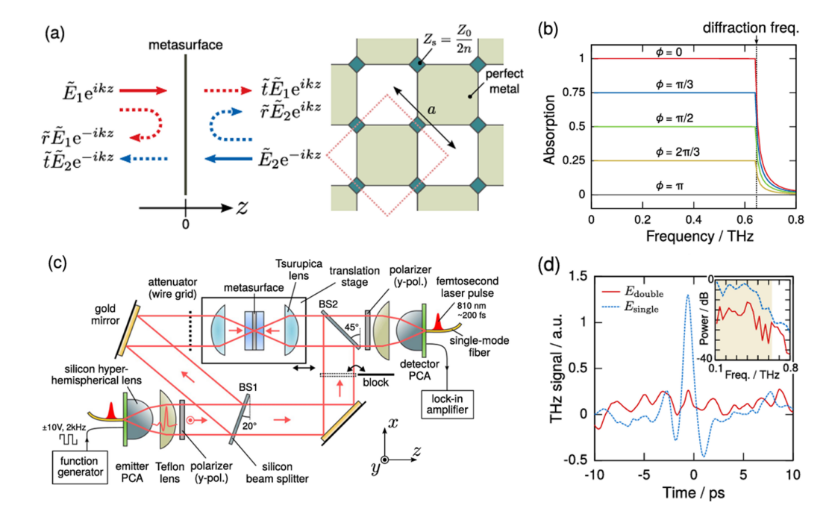
Fig. 2 Metasurface-based dual-channel coherent perfect absorption [2]
Single-channel perfect absorption
Single-channel CPA typically employs a simple optical cavity system. By adjusting the cavity structure, materials, and external excitation conditions, incident light can be absorbed through a single channel. The advantage of this design lies in its simple system structure, which is easy to implement and control.
Literature analysis: Traditional single-channel CPA designs face two major challenges: narrow bandwidth, and effectiveness only for specific optical wavefronts or modes. To address these problems, recent research has combined the concepts of exceptional points (EP) and spatial degeneracy, proposing a novel single-channel coherent perfect absorption design based on multiple cavities — MAD-EP-CPA (Massively Degenerate Coherent Perfect Absorber). This design not only breaks through the bandwidth limitation of CPA, enabling the absorber to operate over a broader spectral range, but also, through the mechanism of spatial degeneracy, can absorb arbitrary incident optical wavefronts regardless of their angle or phase. The design consists of four lenses and two sub-cavities, forming an exceptional point through two cavities with overlapping frequencies to broaden the spectral response. A random speckle field is used as the incident field, with various reflection and transmission parameters set for simulation. In Figure 3b, the black dashed line shows the reflection spectrum of traditional CPA, which is Lorentzian in shape, revealing its relatively narrow absorption bandwidth. The yellow curve is the reflectivity curve of this design, which exhibits an ideal quartic effect, indicating that the system is at an exceptional point (EP) with "quartic" behavior. Notably, the deviation of the refraction path caused by the absorbing material can be compensated by adjusting the focal length of the lenses, thereby restoring the CPA effect. This innovative design not only effectively solves the limitations of traditional CPA in terms of bandwidth and mode dependence, but also provides a more efficient absorber solution for applications in optical and terahertz sensors, optical switches, and other fields.
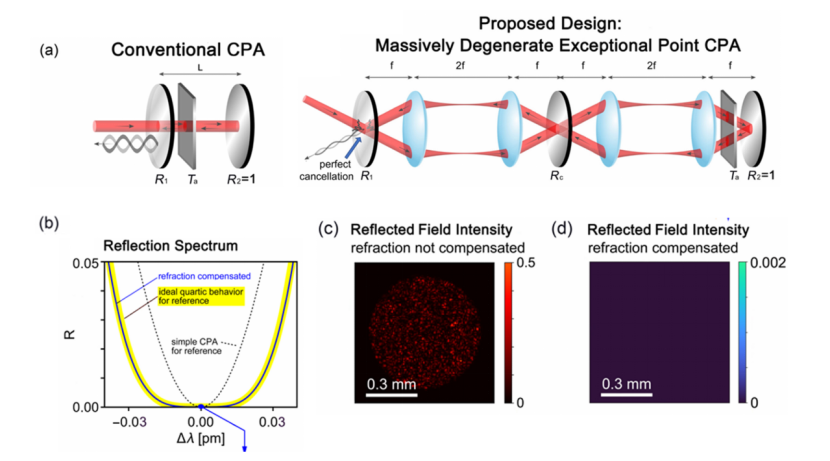
Fig. 3 Multi-cavity single-channel coherent perfect absorption [3]
References:
[1] Jin Y, Yu K. Broadband single-channel coherent perfect absorption with a perfect magnetic mirror[J]. Optics Express, 2020, 28(23): 35108-35117.
[2] Urade Y, Nakata Y, Nakanishi T, et al. Broadband and energy-concentrating terahertz coherent perfect absorber based on a self-complementary metasurface[J]. Optics Letters, 2016, 41(19): 4472-4475.
[3] Hörner H, Wild L, Slobodkin Y, et al. Coherent perfect absorption of arbitrary wavefronts at an exceptional point[J]. Physical Review Letters, 2024, 133(17): 173801.