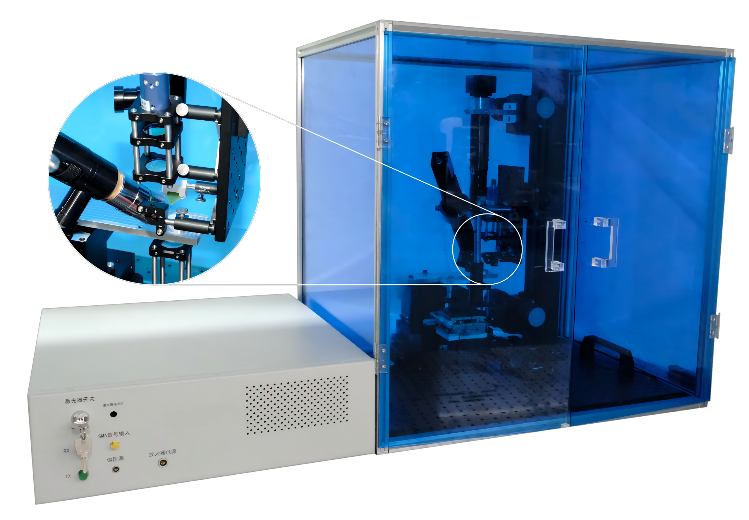
In 2024, Chengdu Miji Technology Co., Ltd. successfully delivered a micron-probe system to the National University of Defense Technology. The system supports far-field and near-field scanning imaging, and is equipped with an independent sample stage and probe stage, each mounted on a three-axis translation stage, enabling precise scanning imaging of the terahertz spatial distribution. The system can be used for the measurement and imaging of terahertz surface waves, simultaneously recording their amplitude and phase information. The overall system consists of the company's self-developed terahertz spectroscopy system and a micron-probe scanning subsystem, demonstrating a high level of technological innovation.
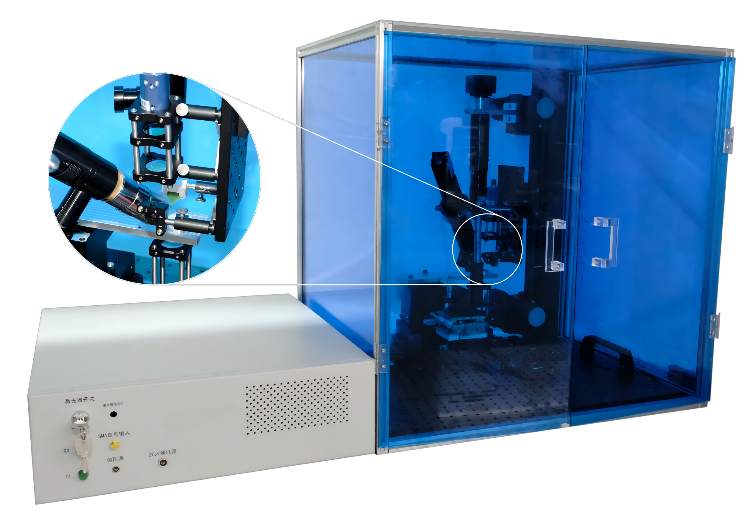
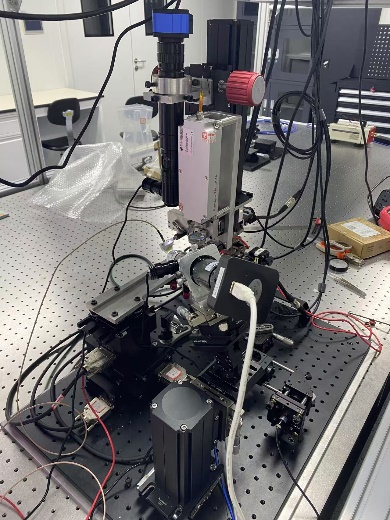
Figure 1. System schematic
System Functions:
This system integrates terahertz far-field and near-field measurement functions. Through the three-axis motorized design of the detection module and sample stage, rapid switching between far-field and near-field modes is achieved. Mode switching can be completed directly from the software, with no optical path adjustment required, greatly reducing researchers' alignment time. In far-field mode, the system functions similarly to a far-field transmission time-domain spectroscopy system, enabling terahertz spectroscopy and imaging; in near-field mode, it supports micron-level terahertz spatial-distribution imaging of large-area samples up to 5 cm × 5 cm, significantly improving experimental flexibility and efficiency.
Far-Field Scanning Test:
Similar to a conventional far-field time-domain spectroscopy system, this system also implements far-field terahertz measurement by moving the sample stage and probe, as shown in Figure 2. When the sample thickness is known, the relationship between the sample's conductivity and frequency can be further calculated, revealing its spectral characteristics in greater depth.
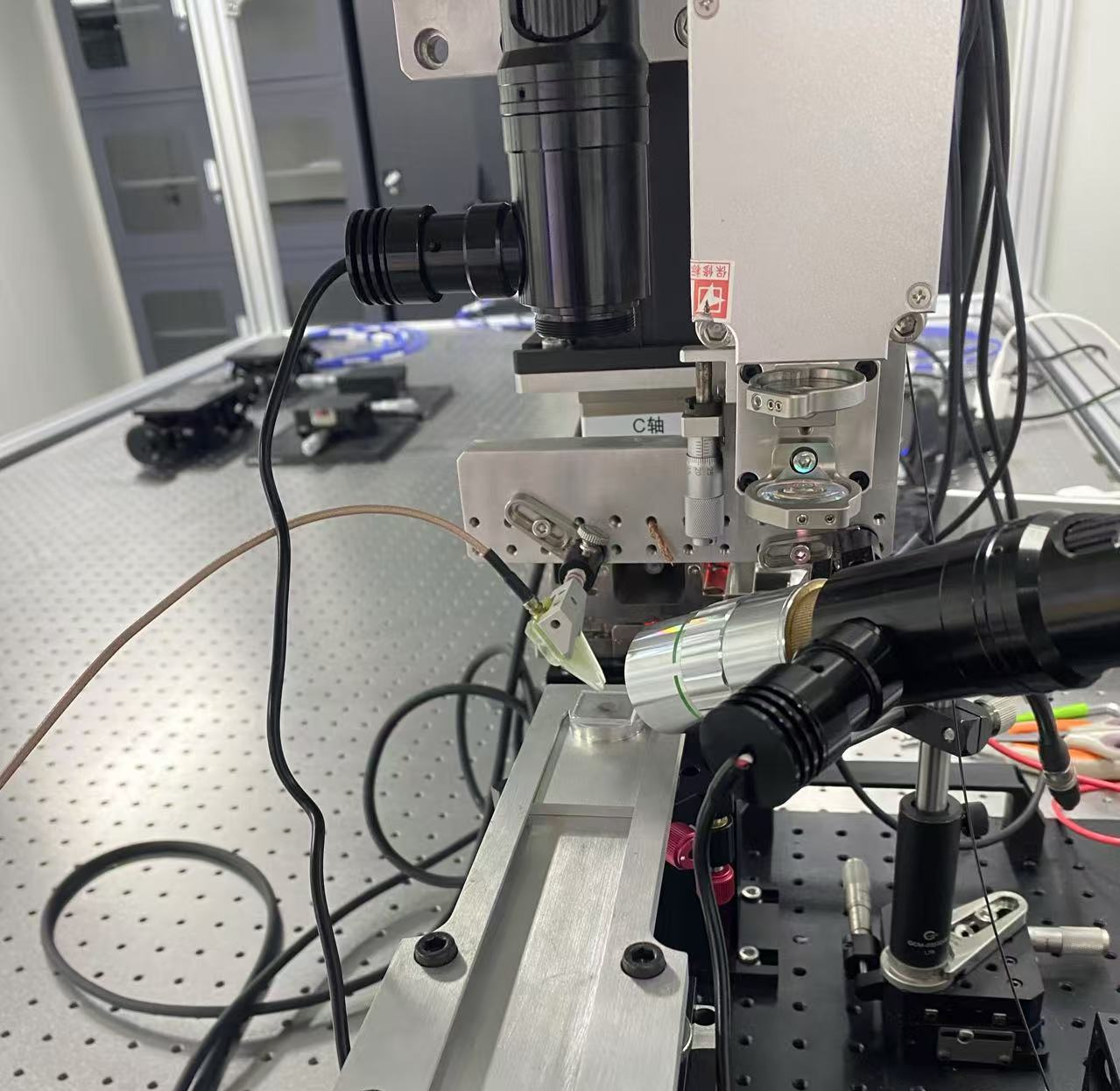
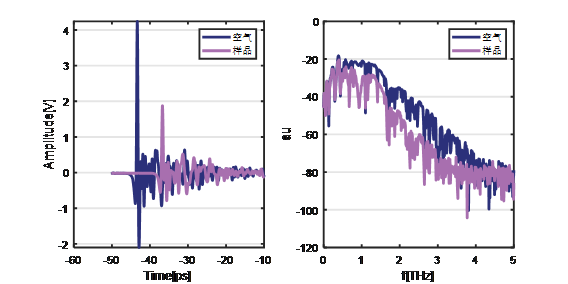
Figure 2. Far-field spectral measurement
In addition, the system supports far-field scanning imaging by moving the probe scanning stage. Taking the focused spot of a TPX lens as an example, Figure 3a shows the scanning imaging result of the spot; by further moving the z-axis, a three-dimensional image of the spot's spatial distribution can also be obtained, as shown in Figure 3b.

Figure 3. Far-field scanning test
Near-Field Scanning Test:
Centered on a terahertz time-domain spectroscopy system and a micron-scale photoconductive probe, this system guides the spatially localized characteristics of terahertz radiation into a micron-scale near-field region, achieving high-resolution terahertz near-field detection. Thanks to the photoconductive probe's unique near-field enhancement effect, the distance between the terahertz radiation and the detector is significantly shortened, bringing the detection process closer to the target surface and providing a more refined observation platform for studying light-matter interactions.
The probe's direct detection approach not only expands the experimental scope of terahertz near-field detection, but also opens up entirely new possibilities for research in related fields. In addition to retaining the advantages of conventional time-domain spectroscopy systems, the system can simultaneously acquire terahertz amplitude and phase information at different positions in three-dimensional space. Figure 4 shows the near-field scanning imaging result of a metalens, further demonstrating the system's powerful high-resolution near-field imaging performance.
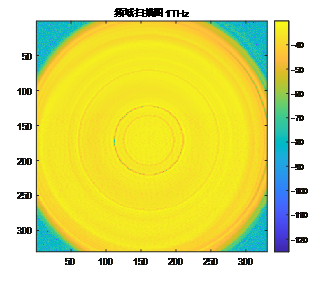
Figure 4. Near-field scanning image of a metalens
Overall system specifications:
| Spectral bandwidth | 0.1–2.5 THz |
| Spectral resolution | ≤ 2.5 GHz |
| Signal-to-noise ratio | ≥ 50 dB |
| Maximum probe resolution | ≤ 20 µm |
| Maximum probe scanning range | 5 cm × 5 cm |
| Minimum probe scanning step | ≤ 2 µm |