Chengdu Miji Technology Co., Ltd. ("the Company"), armed with cutting-edge international terahertz theories and technological achievements, has exploratively combined academic research, theoretical research and engineering application research to develop a series of terahertz nano-imaging products.
The team of Professor Hu Min — the Company's legal representative and a professor at the Terahertz Research Center of UESTC — collaborated with the team of Professor Li Peining of Huazhong University of Science and Technology to successfully develop the revolutionary "time-domain-filtered terahertz nano-imaging technology (THz-TDF)", and, together with the team of Professor Zhang Hui of Zhejiang University, applied it for the first time to nanoscale spectral analysis of ancient painted pigments.
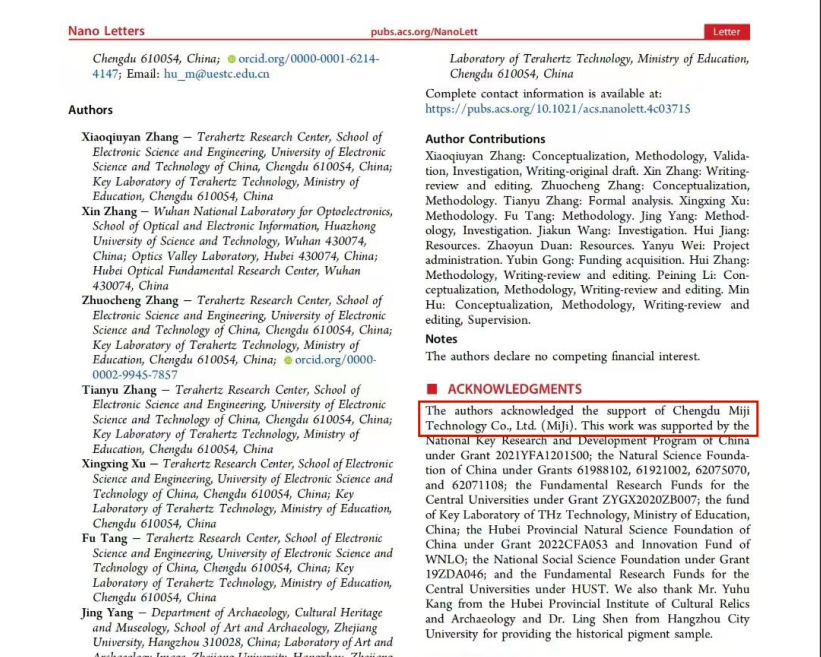
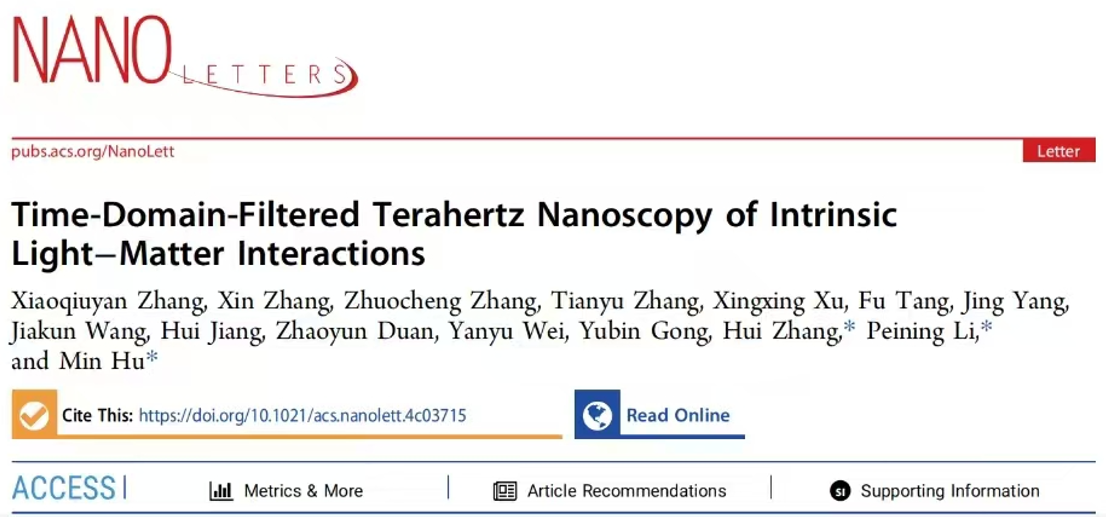
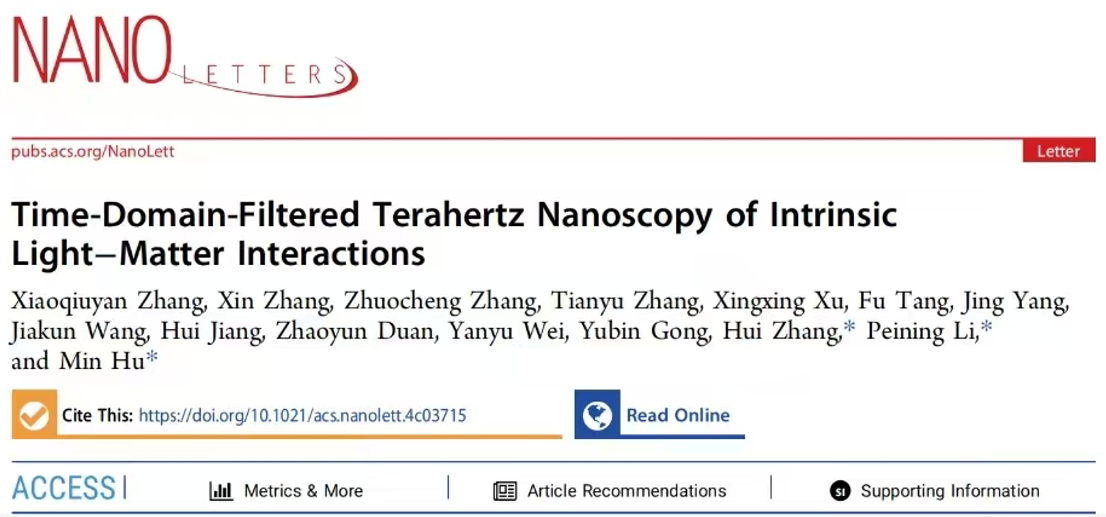
The research results were published in the internationally renowned journal Nano Letters under the title "Time-domain-filtered terahertz nanoscopy of intrinsic light-matter interactions", revealing the technology's application potential in nano-optics and, in particular, its breakthroughs in pigment analysis of ancient artworks.
The findings break through the bottleneck of conventional terahertz imaging at the nanoscale and provide a new method for detecting deeply sub-wavelength localized surface waves. The new technique was applied in cultural relic conservation to the analysis of historical sculpture pigments (such as cinnabar and red lead), revealing their local characteristics with nanoscale resolution. By combining time-domain filtering with an extended cantilever, the terahertz nanoscopy technique successfully solved the insufficient resolution of conventional terahertz imaging at the nanoscale. The paper also reports the first international observation of nano-resonance spectra of materials, revealing light-matter interactions in natural materials.
Article link:
https://doi.org/10.1021/acs.nanolett.4c03715