Author: Tang Fu
In 2022, Chengdu Miji Technology Co., Ltd. successfully delivered a terahertz near-field optical microscopy system to a research institute in Chengdu. The system integrates multiple functions including terahertz far-field transmission and reflection, as well as terahertz near-field imaging and spectroscopy. The main body of the system consists of a Toptica far-field terahertz time-domain spectrometer (a domestically produced time-domain spectrometer option is available upon request) and a dedicated near-field atomic force main unit.
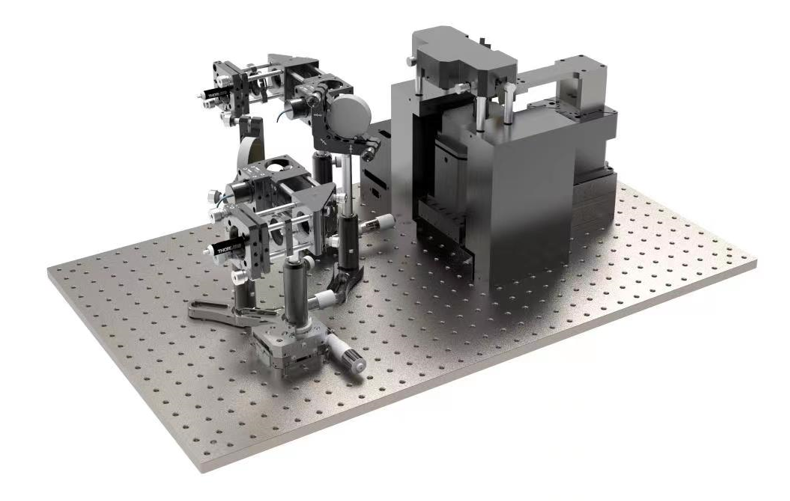
Figure 1. Terahertz near-field optical microscopy system

Figure 2. Optical path of the terahertz near-field optical microscope (with red guide light)
System Functions
The system mainly integrates terahertz far-field and near-field measurement functions. Switching between the two is accomplished via a magnetic base — quick and convenient, with no additional optical path adjustment required, greatly saving researchers' optical alignment time. In near-field measurement, the system can perform terahertz near-field imaging and near-field spectroscopy. For far-field spectral measurement, the system comes with transmission and reflection sample measurement kits, which can likewise be switched via magnetic bases for quick experiments.
Near-Field Measurement
Traditional near-field optical microscopy systems mainly operate in the visible and near-infrared bands. By collecting tip-scattered near-field signals, they break through the diffraction limit and achieve super-resolution imaging with nanoscale resolution. Terahertz waves lie between infrared and microwaves in the electromagnetic spectrum and possess many unique physical properties. Combining a terahertz time-domain spectroscopy system with near-field optical technology enables terahertz imaging with nanoscale resolution, bringing new detection methods to nanotechnology, advanced materials, semiconductor inspection and biomedicine.
The terahertz near-field optical microscopy system launched by Miji Technology adopts a high signal-to-noise-ratio terahertz system, enabling near-field imaging up to the third order while simultaneously acquiring AFM topography data of the sample surface. While performing near-field imaging, it can also measure the terahertz near-field spectrum at every pixel of the system.
It should be noted that terahertz near-field spectral measurement is fundamentally different from far-field spectral measurement. Take a single bow-tie antenna as an example: in the near-field environment, its antenna resonance characteristics can be measured — something that cannot be achieved with far-field terahertz time-domain spectroscopy.
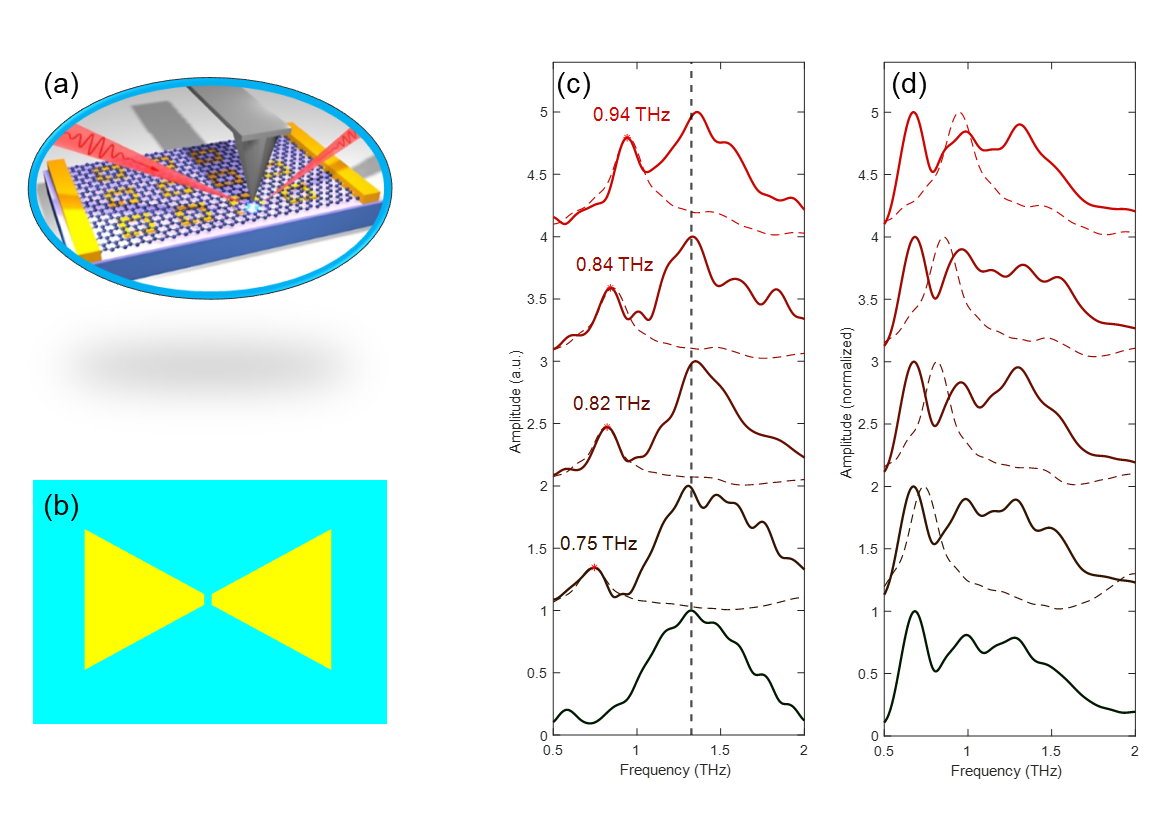
Figure 3. Terahertz near-field antenna resonance measurement. (a) Schematic of terahertz near-field antenna resonance measurement; (b) bow-tie antenna structure; (c) near-field measurement by our system — simulation matches reality; (d) near-field measurement by an imported system — simulation does not match reality
The atomic force main unit in the near-field system is a dedicated near-field atomic force microscope (AFM) with an open structure. Unlike most AFMs on the market, an atomic force system for near-field optics must maintain spatial openness while offering multi-channel demodulation output. The open structure ensures that external light sources (visible–infrared–terahertz) can be smoothly focused onto the tip. Mainstream near-field AFMs on the market are mainly German systems (Nearspec series, Bruker IR series), which are expensive and difficult to integrate with customers' own terahertz equipment. While maintaining an open structure, our near-field AFM offers specially shaped off-axis focusing mirrors of different types and focal lengths, maximizing compatibility with different kinds of terahertz sources.
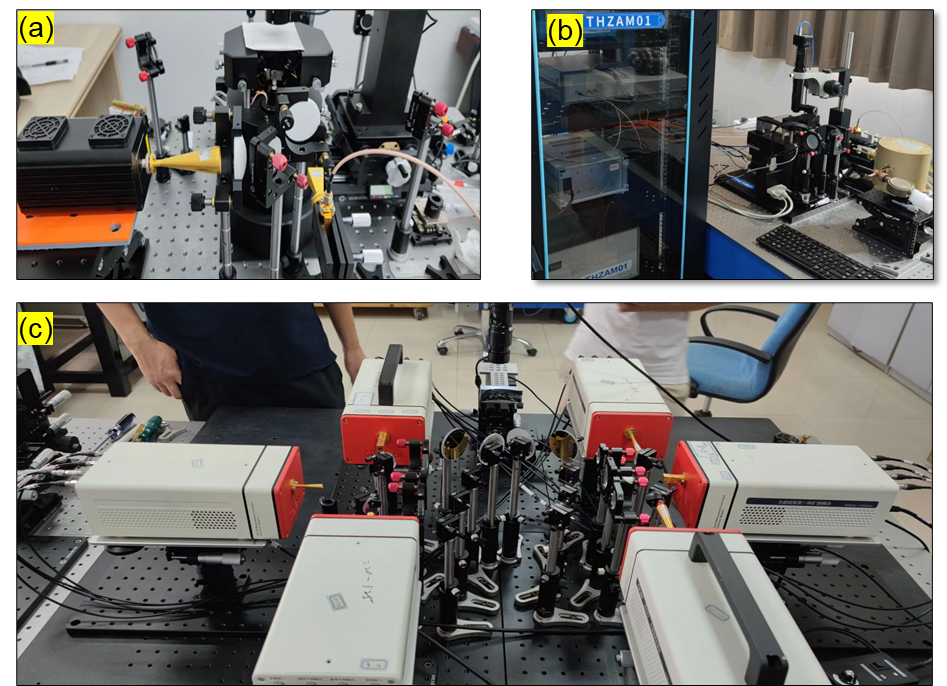
Figure 4. Different types of terahertz near-field optical systems. (a) Solid-state source (97.8 GHz, 80 mW) terahertz near-field; (b) 340 GHz backward-wave tube terahertz near-field; (c) vector network analyzer (110 GHz–1100 GHz) near-field
Because terahertz radiation is invisible in near-field measurement, we have integrated a coaxial red alignment light source to facilitate optical path guidance, greatly reducing optical alignment time. This also applies to infrared near-field systems.
Far-Field Measurement:
To maximize the advantages of the terahertz time-domain spectroscopy system, our system also comes with terahertz far-field transmission and reflection scanning optical paths, helping customers conduct terahertz far-field scanning experiments at the same time.
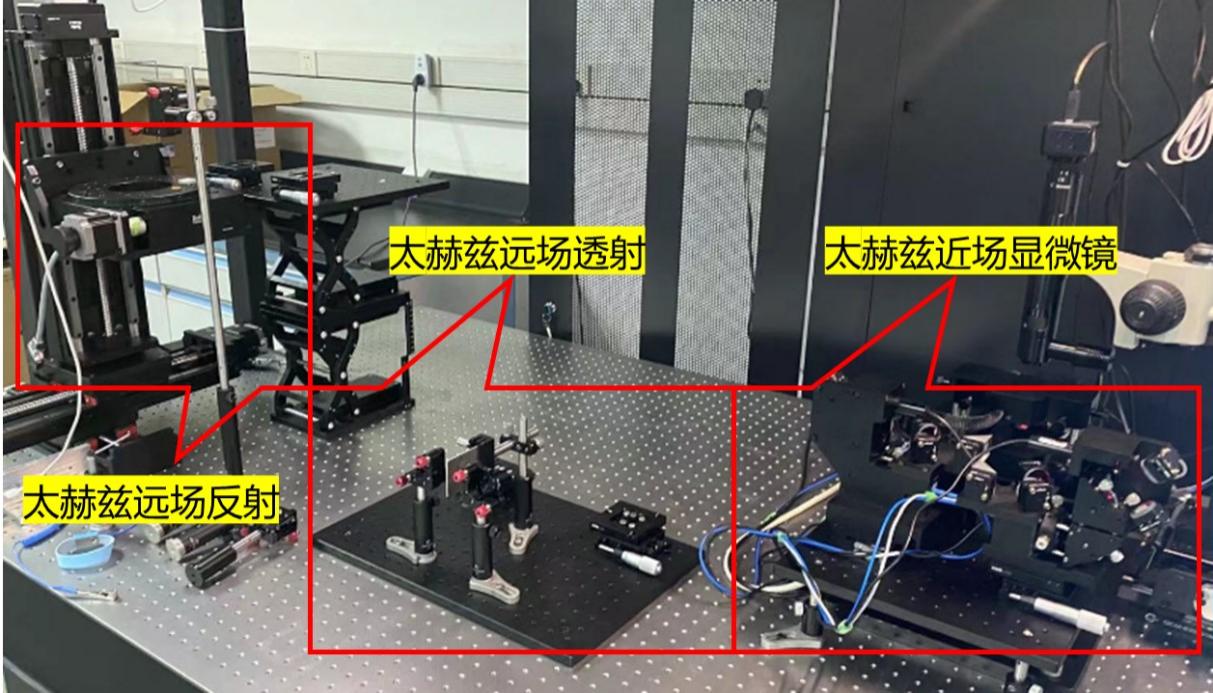
Figure 5. Schematic of the complete system assembly
Overall system specifications:
| Terahertz far-field spectral range | 0.1–6 THz |
| Terahertz far-field spectral dynamic range | 90 dB |
| Terahertz near-field spectral range | 0.5–2.5 THz |
| Terahertz near-field imaging resolution | 40 nm |
| AFM near-field single scan range | 91 µm × 91 µm × 8 µm (XYZ) |
| AFM scanning accuracy | 0.5 nm × 0.5 nm × 0.2 nm (XYZ) |
| Optical CCD camera | 5 megapixels |
| High-performance system workstation | 32 GB RAM, 3.0 GHz CPU, 2 TB storage |
Chengdu Miji Technology Co., Ltd. has long been committed to the localization of high-end terahertz equipment and near-field optical equipment. The company will continue to follow international frontier developments in related fields and publish professional interpretations of related work — stay tuned. The company currently offers terahertz far-field imaging and time-domain spectroscopy systems, terahertz near-field imaging and spectroscopy systems, and terahertz photoconductive-probe near-field systems (micron-level resolution). Researchers interested in sample testing are welcome to contact us and send samples for testing.