Author: Wang Yueying
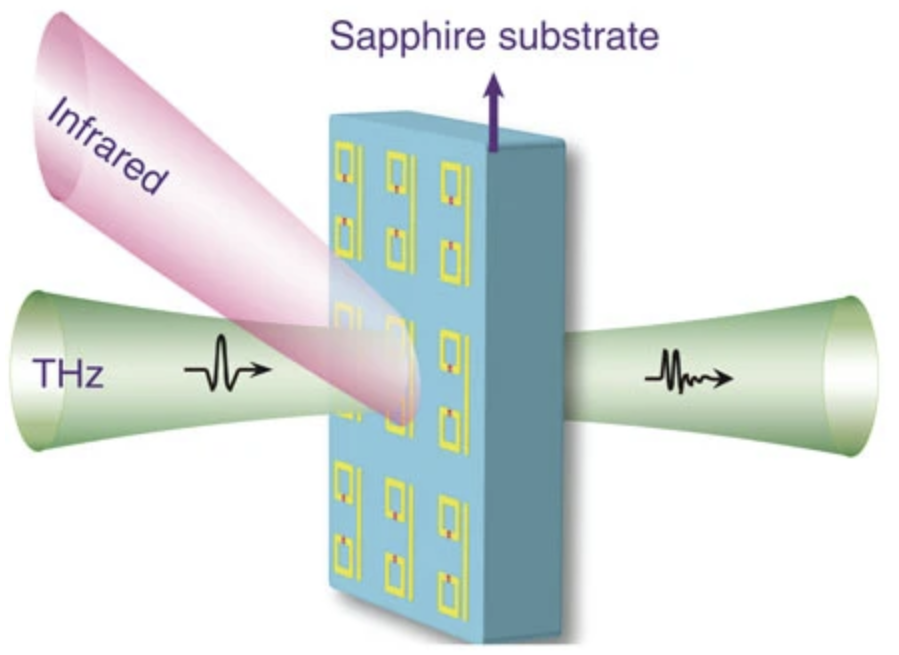
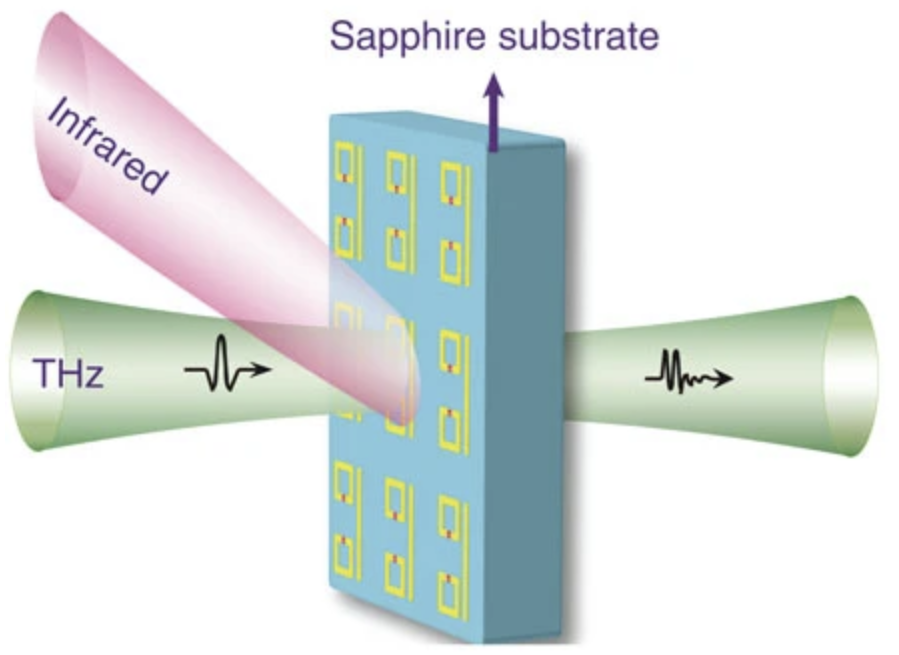
In free space, when light interacts with matter and excites electrons to higher energy states, the electrons return to the ground state through spontaneous emission. Generally speaking, this process is irreversible. However, when matter is placed inside an optical microcavity and coupled to it, the spontaneous emission process of the electrons can be reversed, leading to reabsorption and re-emission of photons within the cavity. This process gives rise to Rabi oscillation, in which the electron oscillates between the ground and excited states at the Rabi angular frequency 2g, where g is the coupling strength between the transition dipole moment and the microcavity mode. When this coupling strength exceeds the decay rates of both the material and the microcavity, we call it strong coupling [1]. Strong coupling theory is at the core of contemporary cavity quantum electrodynamics (QED).
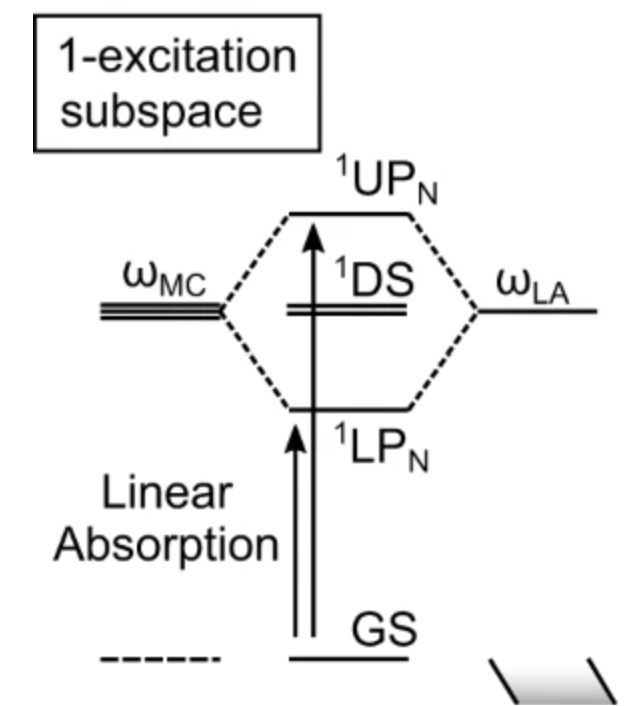
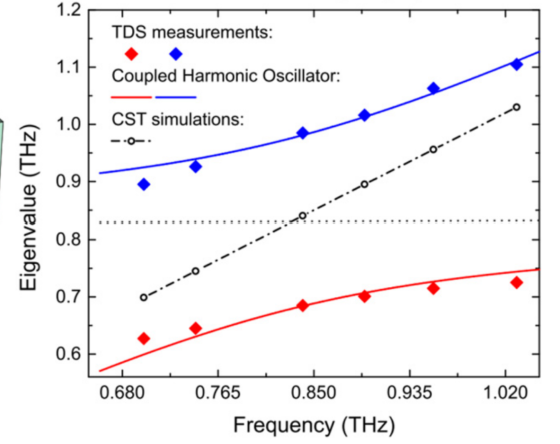
Traditional QED research has focused on understanding the behavior of photons in strongly coupled systems [2]. Over the past decade or so, scientists have gradually shifted their research focus toward regulating material properties through strong coupling, such as improving the electrical conductivity or superconductivity of materials or structures, and controlling ground and excited states in chemical reactions [3-4].
With advances in fabrication technology, metamaterials with subwavelength dimensions and designable electromagnetic responses are increasingly being used in strong coupling research. In particular, the dark modes of metamaterials are widely used to increase Q factors and suppress radiation losses, enabling electromagnetically induced transparency (EIT) [5], Fano resonances [6], and bound states in the continuum (BIC) [7].
The static strong coupling between metamaterials and microcavity photons described above has been extensively studied. It is foreseeable that future research will focus on achieving active and dynamic control of metamaterial polarization modes by controlling the loss and coupling strength of the coupled modes. Several promising categories at present include:
- Time-resolved spectroscopy, particularly the study of sub-cycle dynamics in pulse-perturbed oscillating systems. Achieving ultrafast switching of polarization modes is crucial for the design of ultrafast optoelectronic devices [8].
- Autonomously tunable or reconfigurable metamaterial systems, which could employ materials whose conductivity is easily tuned by light/electricity, such as two-dimensional materials and transition metal semiconductors. In addition, due to their high sensitivity to temperature, magnetic fields, electric current, and optical radiation, high-temperature superconducting materials are also gradually being applied to the design of terahertz broadband tunable resonant elements [9].
- By increasing the coupling strength (from strong coupling to ultra-strong and even deep-strong coupling), a gradual transition from classical physics — including the coupling of various classical electromagnetic modes — to quantum systems, such as the coupling of electromagnetic modes with fermions.
- Non-Hermitian photonics. In quantum mechanics, the Hermiticity assumption (the Hamiltonian operator equals its complex conjugate transpose) is generally considered a basic requirement for the Hamiltonian to yield real eigenvalues. However, recent research has shown that open quantum systems, such as polaritons, are strictly speaking non-Hermitian systems. One of the most typical features of non-Hermitian systems is the exceptional point, which arises from energy band degeneracy caused by changes in parameters such as coupling strength and loss. This exceptional point marks the transition from PT symmetry to PT-symmetry breaking [10]. The simplest non-Hermitian system consists of two coupled resonators, which can be realized through the coupling of a metamaterial and an optical microcavity, and can be described by coupled-mode theory.
In summary, the strong coupling between metamaterials and optical microcavities exhibits many novel and interesting physical phenomena, including non-Hermitian optics, many-particle interactions, and sub-cycle ultrafast dynamics. In future QED theoretical and experimental research, metamaterials are bound to occupy a position that cannot be ignored. And nanoscale optical studies of subwavelength-sized metamaterials are inseparable from high-spatial-resolution scattering-type scanning near-field optical microscopy (s-SNOM).
Note: Chengdu Miji Technology Co., Ltd. has long been committed to the research and development of scattering-type scanning near-field optical microscopy (s-SNOM), with wavelength coverage from visible light to the terahertz band. Inquiries and testing collaborations are welcome.
References
- C. Gerry and P. Knight, Introductory Quantum Optics, Cambridge, Cambridge University Press, 2004.
- S. Haroche, “Nobel lecture: controlling photons in a box and exploring the quantum to classical boundary,” Rev. Mod. Phys., vol. 85, no. 3, pp. 1083−1102, 2013
- B. Xiang, et al., “Intermolecular vibrational energy transfer enabled by microcavity strong light−matter coupling,” Science, vol. 368, no. 6491, pp. 665−667, 2020
- F. Herrera and F. C. Spano, “Cavity-controlled chemistry in molecular ensembles,” Phys. Rev. Lett., vol. 116, no. 23, p. 238301, 2016
- J. Q. Gu, et al., “Active control of electromagnetically induced transparency analogue in terahertz metamaterials,” Nat. Commun., vol. 3, p. 2153, 2012
- N. Liu, S. Kaiser, and H. Giessen, “Magnetoinductive and electroinductive coupling in plasmonic metamaterial molecules,” Adv. Mater., vol. 20, no. 23, pp. 4521−4525, 2008
- K. Koshelev, S. Lepeshov, M. K. Liu, A. Bogdanov, and Y. Kivshar, “Asymmetric metasurfaces with high-Q resonances governed by bound states in the continuum,” Phys. Rev. Lett., vol. 121, no. 19, p. 193903, 2018.
- J. Kuttruff, et al., “Sub-picosecond collapse of molecular polaritons to pure molecular transition in plasmonic photoswitchnanoantennas,” Nat. Commun., vol. 14, p. 3875, 2023.
- Z. Velluire-Pellat, et al., “Hybrid quantum systems with high-Tc superconducting resonators,” Sci. Rep., vol. 13, no. 1, p. 14366, 2023..
[10] S. R.-K. Rodriguez,“Classical and quantum distinctions between weak and strong coupling,” Eur. J. Phys., vol. 37, no. 2, p. 025802,
2016..